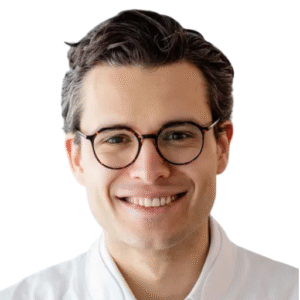
Ricardo Grieshaber-Bouyer
Professor - Clinical Systems Immunology Friedrich-Alexander-Universität Erlangen-Nürnberg
Seminars
Wednesday 15th October 2025
Panel Discussion: TCEs vs Cell Therapy: Comparing the Pros & Cons to Build Smarter Pipelines with the Right Modality for the Right Target
11:00 am
As T-cell engagers (TCEs) rapidly emerge from oncology into the autoimmune space, the field is facing a crucial inflection point: how do TCEs stack up against T-cell therapies in terms of specificity, efficacy, and durability? This panel brings together leading voices spanning TCE and cell therapy modalities to debate how these technologies co-exist, compete, or converge. The conversation will also explore how companies are strategically selecting antigens and indications, and designing pipelines that balance scientific ambition with clinical practicality.
Our expert panelists will:
- Compare the pros and cons of TCEs and engineered cell therapies in autoimmune diseases and their mechanistic strengths
- Discuss how to target the right antigens with the right modality: designing pipelines that align antigen biology with the optimal therapeutic platform
- Debate how durability of response and immune reprogramming differ between modalities, and whether one can truly replace the other
- Strategize how to build a future-proof autoimmune pipeline with complementary or competitive assets across modalities
Thursday 16th October 2025
Panel Discussion: Investigating Preclinical Platforms for Autoimmune T-Cell Engagers From Human Relevant Assays to Regulatory Confidence
2:40 pm
- For TCEs in autoimmunity, conventional preclinical tools, often adapted from oncology, fall short in capturing the inflammatory, chronic, and tissue-specific nature of disease.
- This panel will explore how to build assays that reflect real autoimmune biology, capture safety-relevant signals, and avoid reliance on transgenic animals. With human target expression and immune context being essential, developers are rethinking how they model tissue penetration, subset-specific depletion, and chronic inflammatory responses e.g. for emerging modalities like gamma delta T-Cell engagers.
- Regulatory expectations are also evolving, and this session will address what evidence best supports safe and effective IND filings.
- Building disease-relevant in vitro systems that incorporate inflammatory cytokine environments to reflect autoimmune activation states
- Demonstrating selective target cell depletion and tissue or lymph node engagement in the absence of exaggerated cytokine release or off-target killing
- Replicating chronic, low-grade inflammatory contexts in preclinical assays to detect tolerability and null responses rather than acute cytotoxic triggers
- Evaluating the translational relevance of preclinical models, such as for gamma delta T-cell engagers and define how to justify safety and efficacy without conventional animal studies
Wednesday 15th October 2025
Overviewing T-Cell Engager Success in Autoimmunity & Taking Learnings From Oncology For Efficacy, Safety & Smarter Design
9:00 am
- Gaining a high-level overview of the current TCE pipeline in autoimmunity, including lessons learned from oncology programs and key distinctions in target biology and patient needs
- Exploring how biotech and pharmaceutical companies are repurposing or adapting B-cell and plasma-cell depleting assets originally built for oncology for use in RA, lupus, and other autoimmune diseases
- Investigating real-world efficacy and safety data from early clinical and preclinical programs (e.g., blinatumomab, teclistamab) to assess how well TCEs are performing against the higher bar of autoimmune disease
- Evaluate design principles driving optimal performance in autoimmunity, from affinity tuning and half-life engineering to format selection and target prioritization (CD19, CD20, CD38, BCMA, etc.)
Wednesday 15th October 2025
Chair’s Opening Remarks
8:55 am
Thursday 16th October 2025
Chair’s Opening Remarks
8:55 am