

Accelerate the Development of T-Cell Engagers in Autoimmune Diseases by Expanding Targets Beyond B-Cells, Reducing CRS Toxicities, & Achieve Deep Depletion & Clinical Success
The 2nd T-Cell Engager for Autoimmune Disease Summit arrived at a pivotal moment for the field as autoimmune TCEs rapidly transitioned from oncology-inspired concepts into one of the industry’s most exciting and heavily invested therapeutic modalities. Following major investments and partnerships from companies including Gilead, UCB, Sanofi, and Boehringer Ingelheim, the momentum around T-cell-directed approaches continued to accelerate. Most recently, Boehringer Ingelheim committed up to $15 million to a discovery collaboration with Immunai, using its single-cell AI platform to identify novel targets associated with dysfunctional T cells across cancer and autoimmune disease. This highlighted the growing industry focus on understanding T-cell biology, identifying actionable targets, and leveraging patient-derived data to advance next-generation immune therapies.
As the industry’s only dedicated meeting focused exclusively on autoimmune T-cell engagers, this summit brought together 80+ leaders across discovery, translational, preclinical, clinical, and business development to tackle the field’s most urgent challenges. Discussions explored how to reduce CRS toxicities, improve tissue-selective immune depletion, engineer next-generation engager architectures, and expand beyond B-cell targets. The programme addressed the practical challenges increasingly shaping clinical development. Additionally, discussions included patient recruitment, particularly where patients already had effective standard-of-care options and may have been hesitant to enter trials with uncertain efficacy or safety profiles, as well as biomarker selection and patient stratification to identify the right populations, predict responders, and improve clinical trial design. Discussions also explored how emerging translational insights, patient-derived data, and precision biomarker strategies could help bridge the gap between promising T-cell engager biology and successful clinical development.
With 15+ new speakers, emerging clinical datasets, 2 deep-dive workshops, and 8+ hours of networking including speed networking and interactive roundtables, this forum provided an opportunity for the field to benchmark strategies, build partnerships, and exchange insights on the next generation of autoimmune T-cell engager development.
Great collection of experts who were willing to share their data and experiences in the TCE AID field. Was helpful to pressure test my own thinking in this area against others. I enjoyed the presentations as well as the opportunity to network. The 2 days I attended had just the right number of presentations and breaks to maintain my interest and focus.
Executive Director, GlaxoSmithKline

Content was well-thought, and speakers were the right ones, bringing senior expertise, practical and real data and knowledge, open discussions. I have been at several small conferences in Boston this year, this one and the last TCE in oncology one was exceptionally well run. Anjuli has the perfect balance between technical/scientific know-how and savoir faire with coordinating people timelines and tasks - I look forward to the next one.
Chief Medical Officer, ModeX Therapeutics

Hearing about so many different approaches to TCEs. Speaking with people interested in the field and getting their feedback.
Vice President - Clinical Development, Culllinan Therapeutics

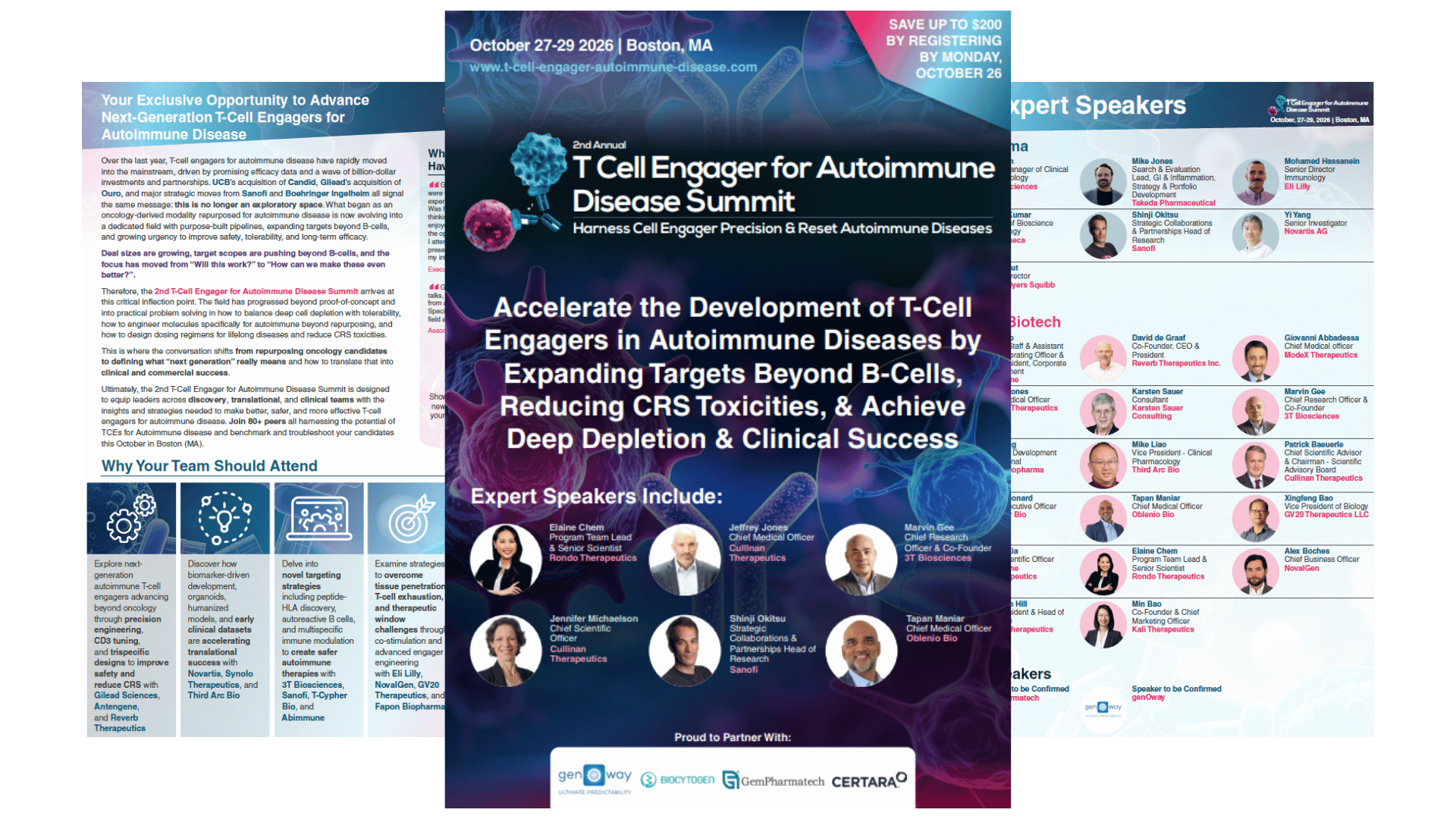
Explore the 2026 Full Event Guide
- 15+ New Expert Speakers Sharing Exclusive Insights Across Discovery, Translational, Clinical, and Regulatory Development for Autoimmune T-Cell Engagers
- 8+ Hours of Dedicated Networking Opportunities Including Speed Networking, Interactive Roundtables, Poster Sessions, and Collaborative Discussion Sessions
- 2 Deep-Dive Workshops Focused on TCE Engineering, CRS Mitigation, Translational Modelling, and Clinical Development Strategies
- New Clinical Data-Focused Sessions Within the “Illuminating TCEs in the Clinic for Autoimmune Disease” Theme Highlighting Emerging Safety, Efficacy, and Dosing Learnings
- Expanded Discussions on Precision Target Discovery, Co-Stimulation, Tissue Penetration, and Next-Generation Immune Modulation Strategies Driving the Future of Autoimmune TCEs




2026 Official Partners


Attending Companies Included




Explore Related Events


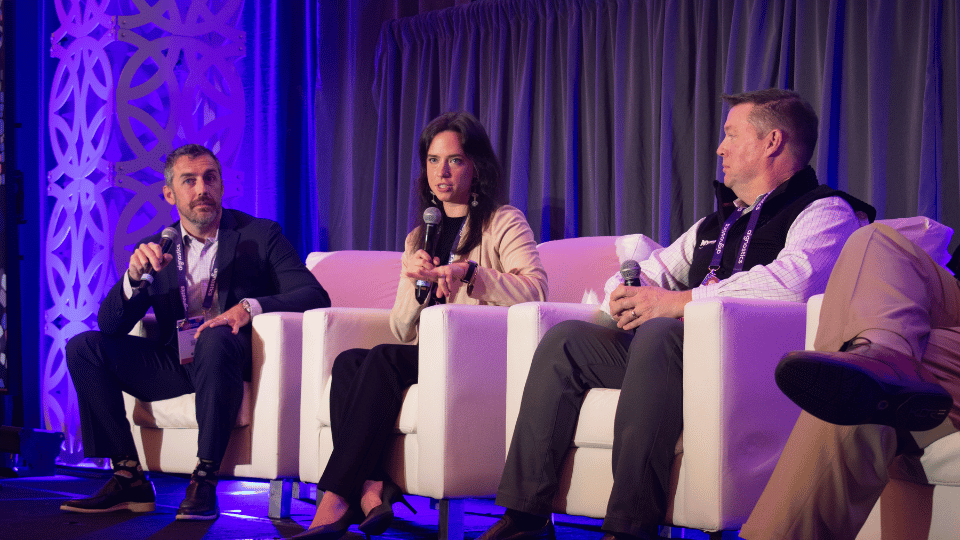
Explore the 2026 Agenda
Discover the latest strategies to engineer safer, more effective autoimmune T-cell engagers through expert-led case studies, clinical data presentations, panel discussions, and interactive workshops.
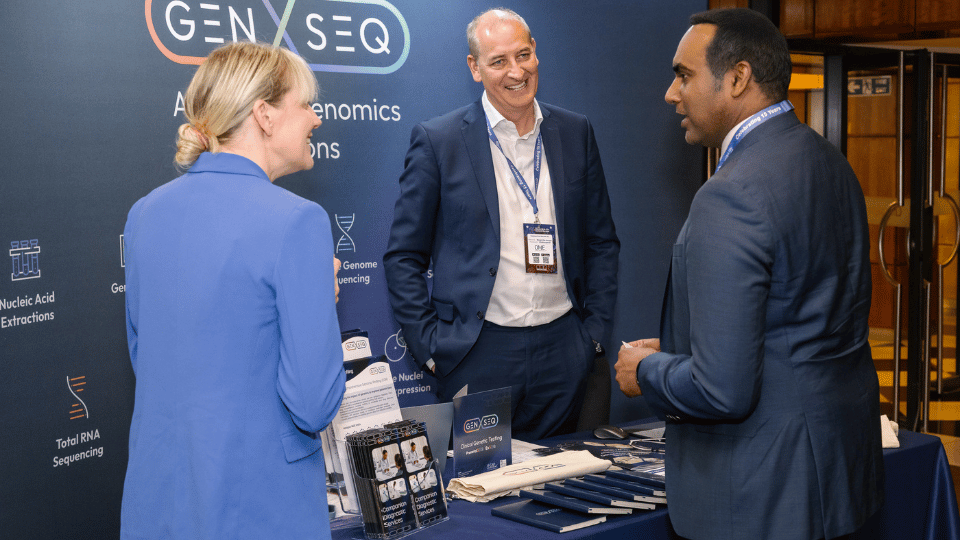
Partner With Us
Showcase your technologies, platforms, and services to biotech and pharma leaders actively developing next-generation autoimmune T-cell engagers and seeking partners to accelerate discovery, translation, and clinical success.
Join Autoimmune T-Cell Engager Leaders in 2027
Connect with discovery, translational, preclinical, and clinical experts driving the next generation of autoimmune T-cell engagers through innovation in target discovery, molecule engineering, and clinical development.